Back to Home

Seller Solution

A Virtual Fitting Room Built for Fashion Sellers

Turn product photos into model-based outfit previews for listings, campaigns, and merchandising without waiting for a full production cycle.
  • Catalog workflows
  • Model consistency
  • Pay-as-you-go credits
Seller Solution
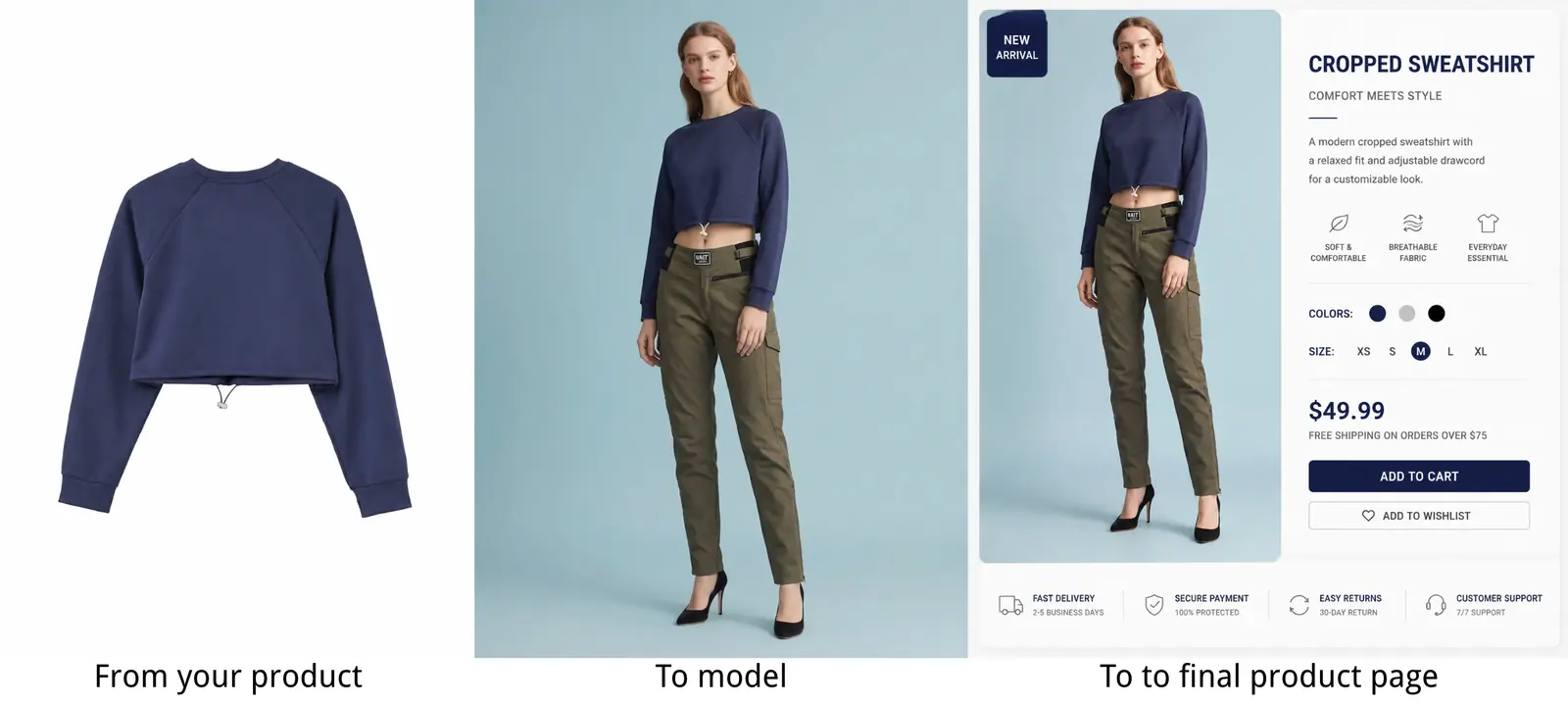
Virtual fitting room seller workflow showing product photos turned into AI model previews and ecommerce visuals

Overview

Help shoppers understand the product sooner

Flat clothing photos communicate the item, but model-based previews communicate the look. A virtual fitting room gives sellers a faster way to explore how products appear on people and prepare clearer visual directions.

Treat generated images as presentation and decision-support assets, not as a replacement for accurate measurements and product details.

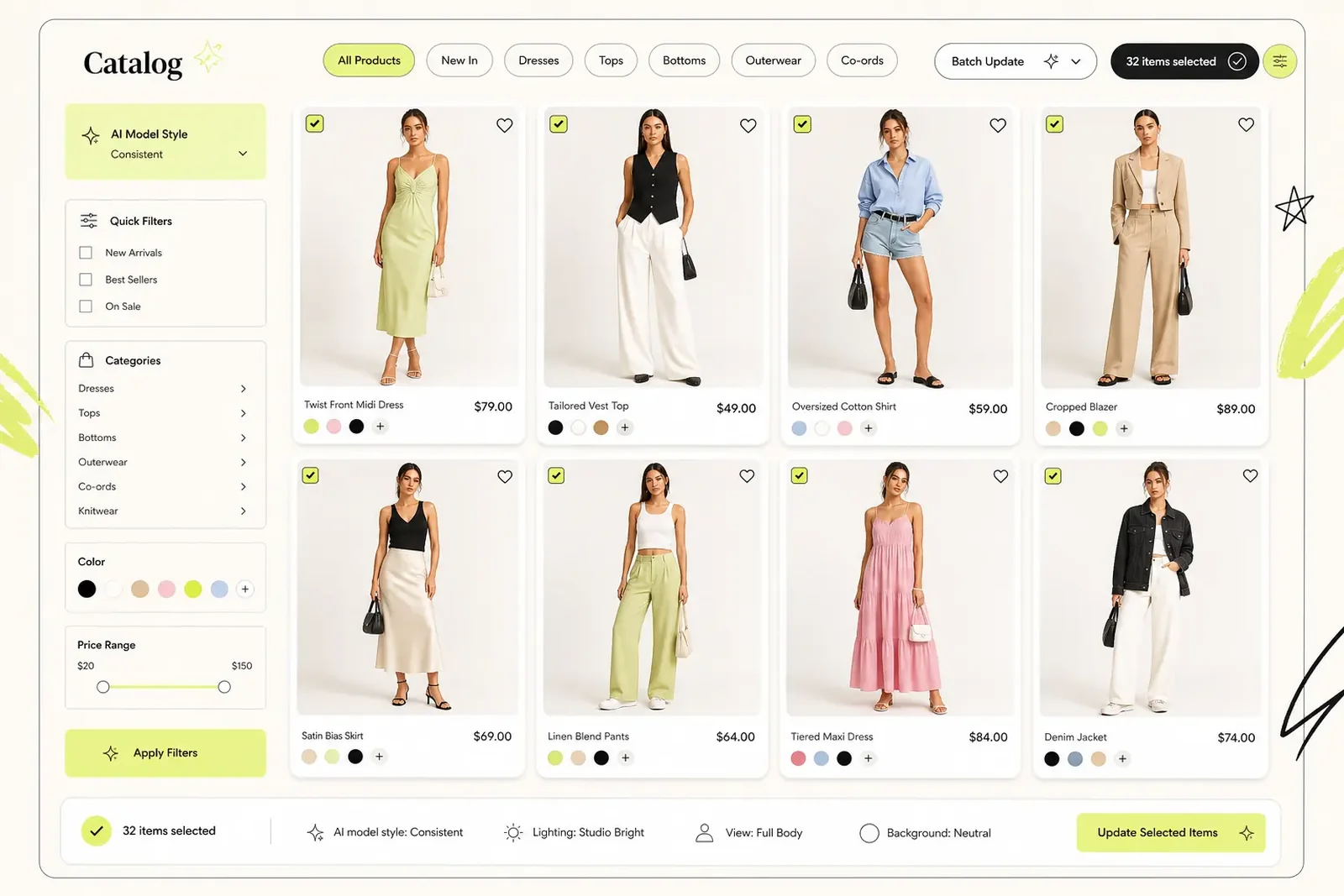
Ecommerce catalog preview with multiple clothing product cards using a consistent AI model style
Use catalog-style previews to plan batch updates, consistent model direction, and collection merchandising before publishing.

Seller previews

See seller workflow examples

Fashion ecommerce catalog grid with consistent model previews across multiple clothing products

Catalog previews

Show multiple apparel items with a consistent model style for batch launches and collection planning.
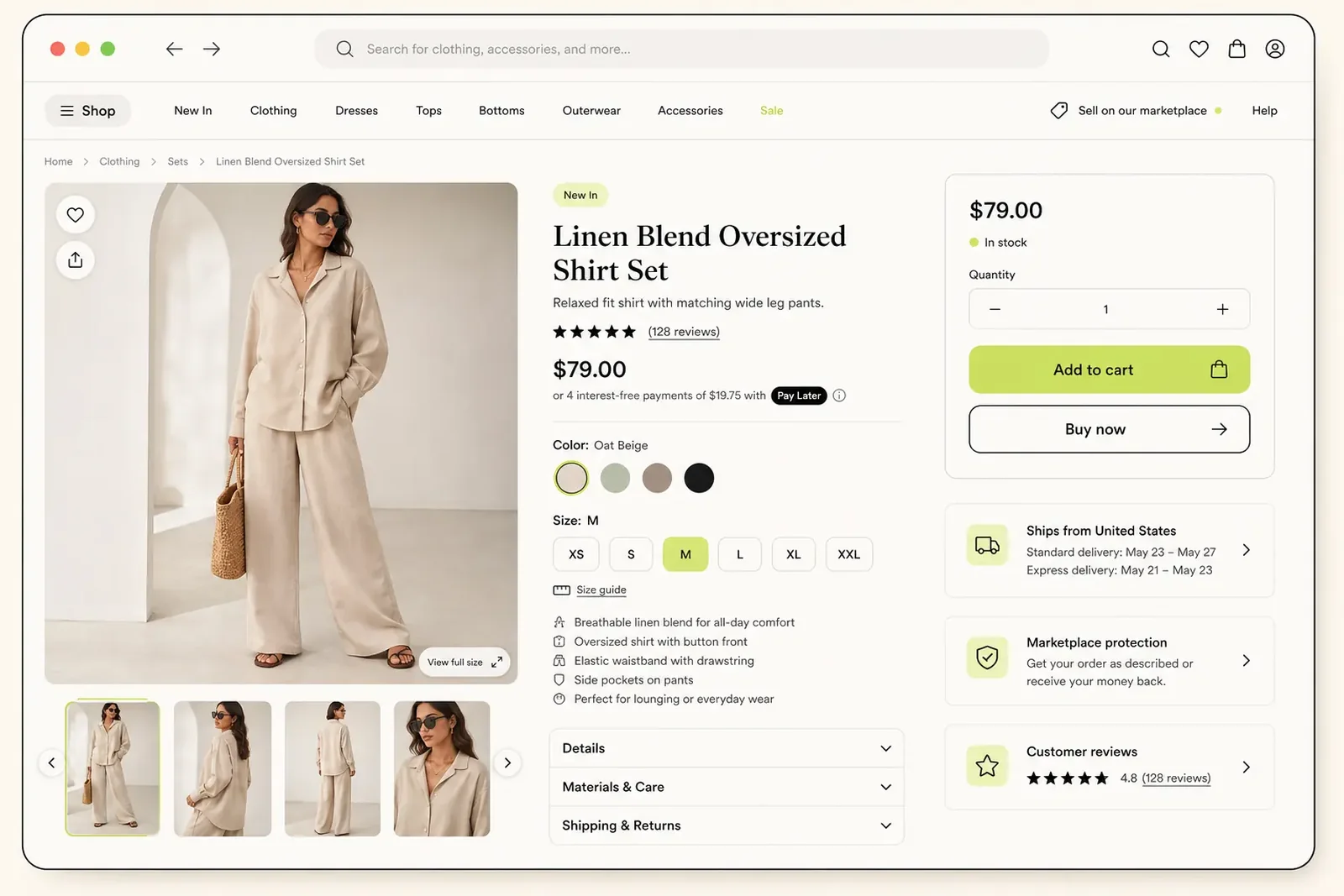
Abstract marketplace clothing listing page with main image, thumbnails, price, and purchase panel

Marketplace listing support

Review how a generated on-model image could support a generic marketplace product detail layout.
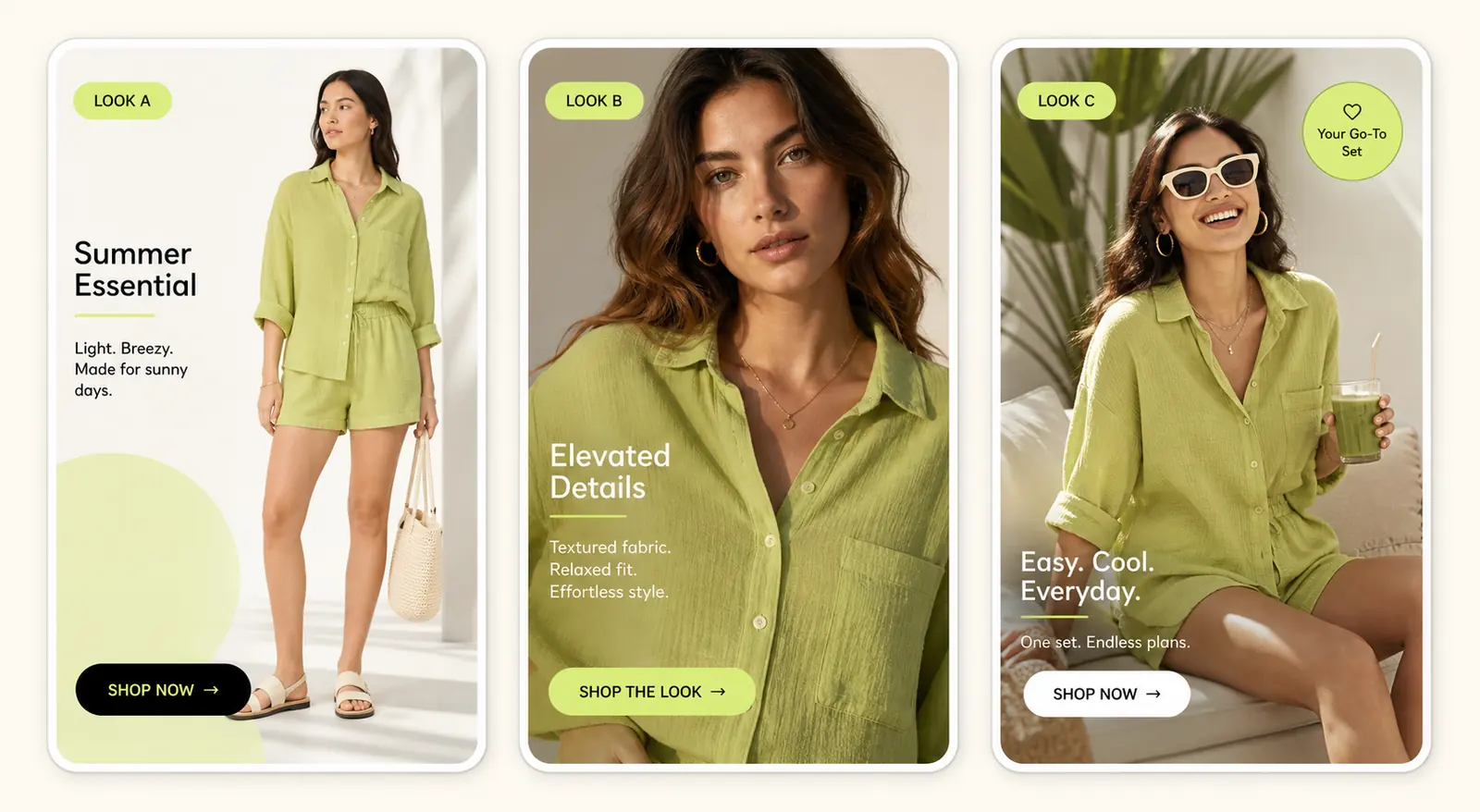
Three vertical fashion campaign creative cards comparing the same clothing item across ad concepts

Campaign creative testing

Compare different crops, models, and ad concepts before selecting the strongest campaign direction.

Real examples

How people can use this page to make a decision

01

Launch products before the final shoot

Problem
A small fashion store has supplier photos and needs early visual direction before samples and studio time are ready.
Workflow
Generate model-based previews from clean garment photos and use them to shortlist which products deserve a full shoot.
Useful result
The team can plan launches, collection pages, and creative briefs earlier without treating AI previews as final product proof.
02

Create marketplace supporting visuals

Problem
A seller has flat apparel photos, but shoppers need more context for silhouette and styling.
Workflow
Use Fitroom to create candidate on-model previews, then review each output against the real product and marketplace image rules.
Useful result
Approved results can support listing, brand content, or ad concept workflows while accurate product information stays intact.
03

Compare model directions for a collection

Problem
A team is unsure which model direction best fits a seasonal drop.
Workflow
Keep the product images consistent, test several preset or uploaded models, and compare the visual tone.
Useful result
The brand can choose a model direction before spending time and budget on a larger production plan.

Why it works

Help shoppers understand the product sooner

01

Faster visual drafts

Create first-pass product and campaign visuals before booking a full shoot or requesting samples.

02

Consistent model options

Preview different garments on a repeatable set of preset models or a model uploaded by your team.

03

Flexible production volume

Use credits when products need new previews instead of adding another fixed production workflow.

How it works

Prepare catalog images

  1. 01

    Prepare catalog images

    Use clean garment photos from your existing product library.

  2. 02

    Set a model direction

    Select preset models that match the audience or upload a brand-approved model image.

  3. 03

    Generate and review

    Create previews, shortlist useful results, and route them into the appropriate content workflow.

Image requirements

Build a repeatable seller photo checklist

A seller workflow becomes easier to scale when every product enters the virtual fitting room with similar image quality and review standards.

Best inputs

  • Use clean product photos with the whole garment visible and accurate color.
  • Keep file naming and product IDs organized so generated previews can be traced back to the original item.
  • Choose preset or uploaded models that match the intended audience and brand direction.
  • Review outputs on desktop before adding them to product, ad, or merchandising workflows.

Avoid

  • Using supplier images when you do not have the rights to reuse or transform them.
  • Publishing generated visuals without checking garment identity, color, pattern, and platform policies.
  • Mixing many lighting styles and model poses when the catalog needs consistency.
  • Replacing size charts, measurements, or real product detail photos with AI previews.

Limitations

Seller review is still required

A virtual fitting room can speed up visual exploration, but sellers still need a quality-control step before any public or paid placement.

  • Marketplace and ad platform rules may limit how generated apparel images can be used.
  • Generated images can help communicate styling, but they do not prove exact fit or product construction.
  • Brand, model, and product image rights should be checked before uploading or publishing assets.
  • High-value campaign hero images may still need traditional photography, retouching, or legal review.

Use cases

A Virtual Fitting Room Built for Fashion Sellers

New product launches

Explore presentation options while samples, photography, or final campaign assets are still in progress.

Marketplace listings

Add model-based context to products that currently rely on flat or mannequin photography.

Ad concept testing

Compare models and combinations before investing in the final creative execution.

FAQ

Questions, answered

Can sellers use generated images in product listings?

They can support listings and marketing workflows, subject to the seller's own platform rules and review standards.

Does a virtual fitting room replace product photography?

It is best used to accelerate previews and expand visual options. Important hero campaigns may still benefit from traditional production.

Can a team upload its own model?

Yes. The User Upload tab lets a seller use an appropriate model image instead of a system preset.

Where should a seller start?

Start with a small product category, define an approval checklist, and compare the generated previews against real product photos before scaling.

Can this help Shopify, Amazon, Etsy, or independent stores?

Yes, it can support visual planning for many selling channels, but each channel has its own image and disclosure rules.

What should the team review before publishing?

Check garment accuracy, color, pattern, model permissions, source-image rights, brand standards, and the rules of the platform where the image will appear.

Start now

Turn one clothing photo into a clearer preview

Upload a garment, choose a model, and create your first AI virtual try-on in seconds.

Start Free Try-On